Ali Takes the Torch
Why Ali?
Ebersol began discussions with Howard Bingham, Muhammad’s photographer, and Lonnie Ali, Muhammad’s wife, on creating the powerful moment. There were challenges ahead, as the team needed to see if Muhammad was willing and able to take part in the ceremony.
Billy Payne, President and Chief of the Voting Committee for the 1996 Olympics, also needed to be convinced. Payne had broken his leg prior to the games, and Ebersol took this opportunity to show Payne just how great Ali really was.
Ebersol played interviews and fight reels for Payne while he was recovering to show him why Ali was the best choice, and Payne agreed that Muhammad was the right person to receive the honor.
One Step at a Time
These highlights mark the steps Ali took to make it to Atlanta.
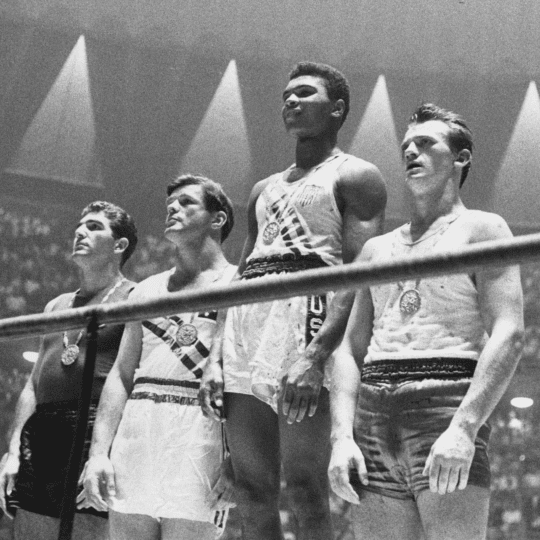
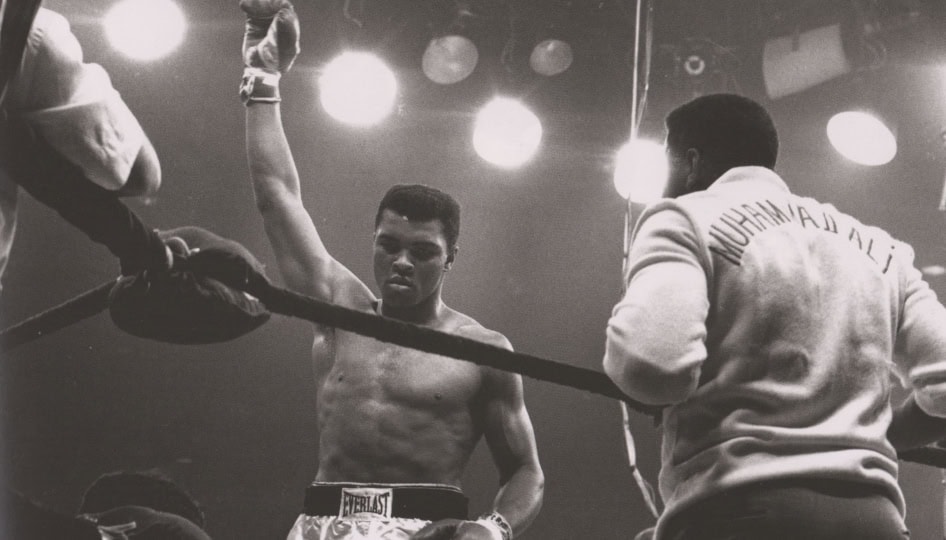
Muhammad in Rome
Ali after winning against Poland's Zbigniew Pietrzykowski.
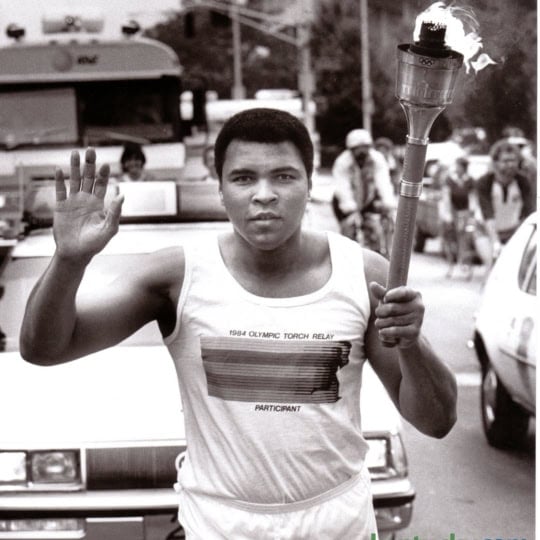
Hometown Hero
Ali carrying the torch through Louisville in 1984.
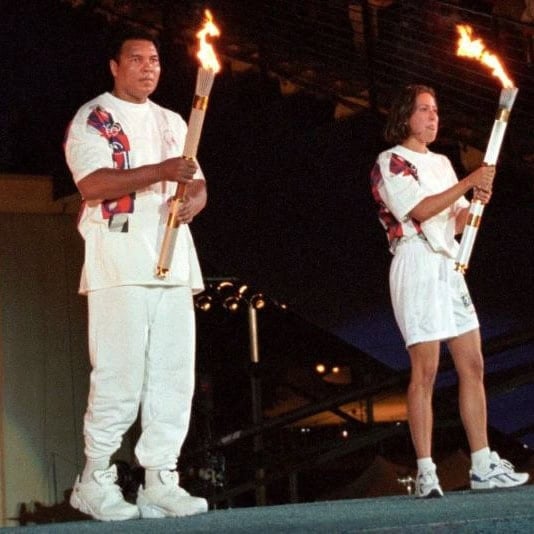
Ali and Janet Evans
Ali and U.S Olympic swimmer Janet Evans in Atlanta, 1996.
The Build Up
When it was confirmed that Muhammad Ali would light the torch, Muhammad and Lonnie were instructed to keep it a secret. If the secret got out that it was Ali lighting the cauldron, the Olympic Committee would have to select someone else.
The only people who knew the secret were Ali’s photographer Howard Bingham, Ali’s two attorneys, and his wife, Lonnie.
About a week before the Games opened, Ali flew to Atlanta for a rehearsal. Organizers needed to make sure Ali could reach the platform safely. He successfully completed the run-through, and the plan moved forward.
The Build Up
Lonnie Ali describes how the special moment in Atlanta was proposed and organized.
The Build Up
Lonnie Ali describes how the special moment in Atlanta was proposed and organized.
The Champ Meets Atlanta Undercover
When Muhammad and Lonnie returned to Atlanta for the Opening Ceremony, they were still kept out of sight. They flew in privately and were taken through back entrances in SUVs with blackout windows so no one would see him and connect him to the ceremony.
They stayed at the Ritz-Carlton in downtown Atlanta. Despite Ali wanting to go out into the city, Lonnie said they couldn’t because his appearance had to remain a surprise.
Instead, they both stayed in, ordered room service, and watched television until the ceremony.
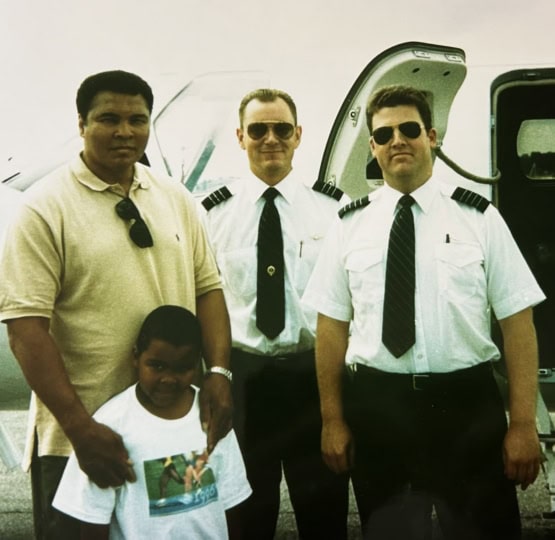
Pilot to the People's Champ
Hear from one of the pilots who flew Muhammad into Atlanta for the opening ceremony.
Marcus Brown and James Neff were assigned pilots for the International Olympic Committee. Brown told the Muhammad Ali Center, “the name of the person to light the Olympic cauldron was the biggest secret of the 1996 Olympics.”
“The morning of the opening ceremonies, we were called and given a briefing to fly to South Bend, Indiana and “pick someone up” and fly them back to the Peachtree Dekalb Airport on the north side of Atlanta where the Olympic flight operations was based,” Brown said.
This was expected as they worked for the Olympic Committee.
They were told by their boss that they would know who it was when they saw them, which was quite nerve-wracking.
“At the scheduled departure time from South Bend, a limo drives up. A lady gets out and says “Hi, we’re the Ali party.” Still having no idea who she was, I ask her where she’s going. She tells me, “Atlanta,” and at that exact moment, Muhammad gets out of the other side of the limo and suddenly it all falls into place. Muhammad Ali is going to light the cauldron and we’re taking him there!” Brown recalled.
When Brown met Ali, he said “Muhammad seemed slightly nervous but also very excited. He had a smile on his face the entire time and appeared to enjoy the flight.”
Fun fact: Muhammad did not like flying when he was younger. His trainer, Angelo Dundee, bought him a parachute to go to the Olympics in Rome at the age of 18. After the very turbulent flight, Muhammad even kissed the ground.
Still, the People’s Champ made a lasting impact beyond the ring.
Brown told us, “His legacy goes far beyond boxing. He showed that one person can bring people together across racial, religious and cultural lines and that greatness is not only what is measured by fame but how you treat others, how you stand by your principles and how you impact all those around you. Even as Parkinson’s disease limited his physical abilities, he still symbolized strength, dignity and perseverance.”
When Hope Becomes History
Lonnie Ali describes the moment Muhammad Ali lit the cauldron.
When Hope Becomes History
Lonnie Ali describes the moment Muhammad Ali lit the cauldron.
THE FLAME THAT LIT THE FUTURE
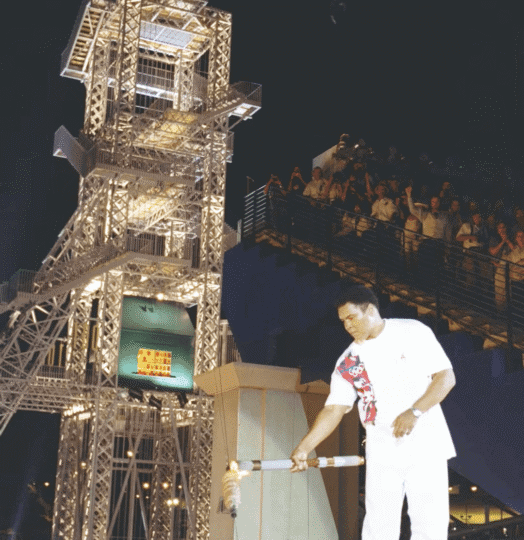
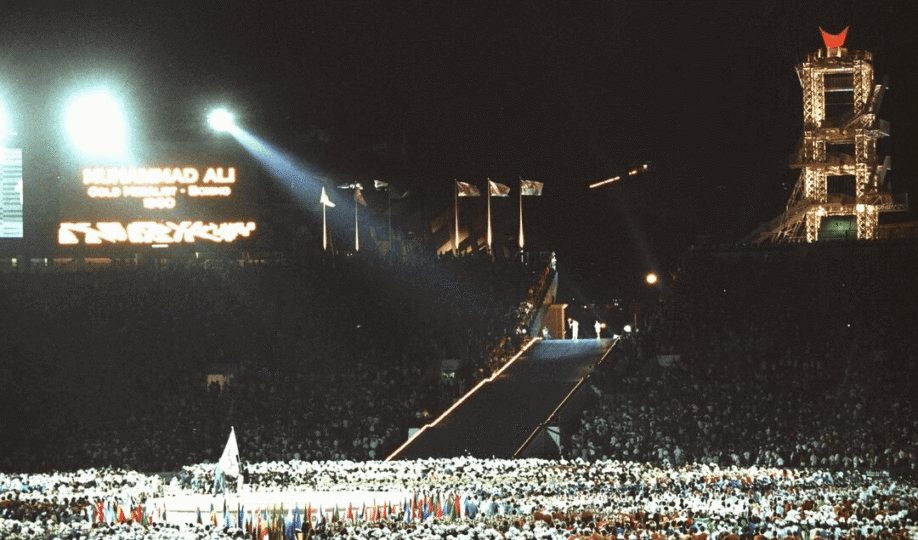
When Muhammad Ali became visible inside the stadium, the crowd erupted. The reaction was immediate; the stadium shifted from anticipation to awe.
Ali had been away from the public eye for some time, and many people were not prepared to see him on that stage. His Parkinson’s symptoms were visible, but the crowd’s reaction showed that people were seeing something larger than the disease. They saw his bravery, his dignity, and the emotional power he still carried.
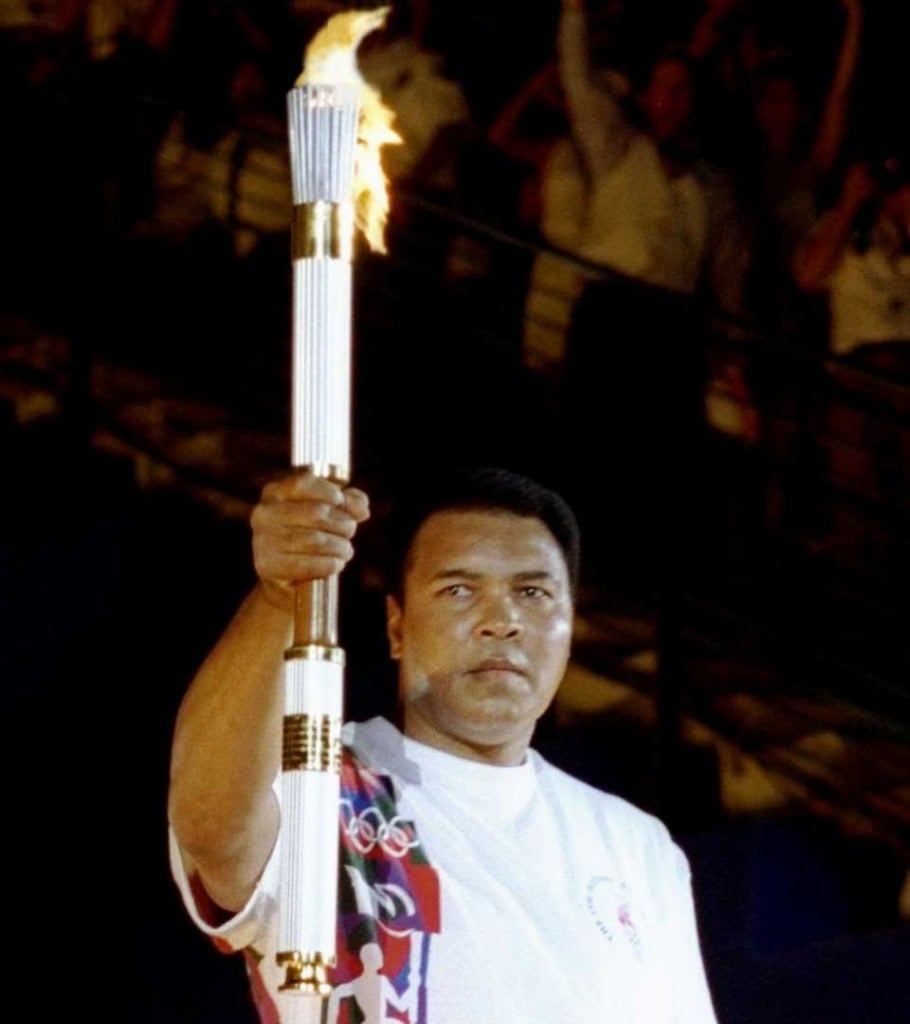
As Ali held the torch, the cauldron did not light immediately because of a mechanical issue. He kept the torch steady until the flame caught. Once it lit, he raised the torch again. In that moment, Ali did not need to speak. His presence told the story.
The cauldron lighting became one of the defining images of the 1996 Olympics, because it revealed a different kind of greatness. He inspired people through courage, vulnerability, and grace.
Olympic Memorabilia
View our collection of memorabilia from the 1996 Olympics hosted on our Digital Museum.
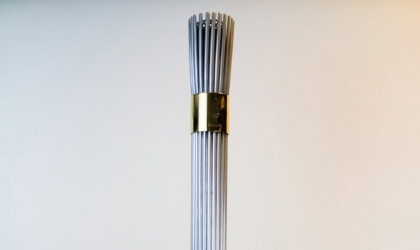
The Torch
This is a photo of the torch that Muhammad Ali held at the 1996 Olympics, currently on display at the Muhammad Ali Center.
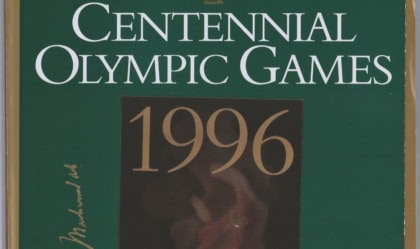
The Program
This is a signed copy of the 1996 Souvenir Program.
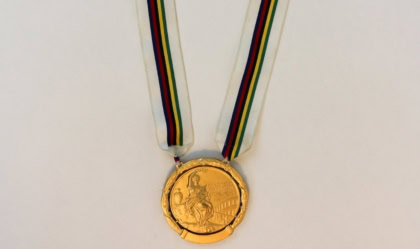
The Medal
This is the replacement gold medal that Muhammad Ali was given in 1996 during the men's basketball final between Team USA and Team Yugoslavia.
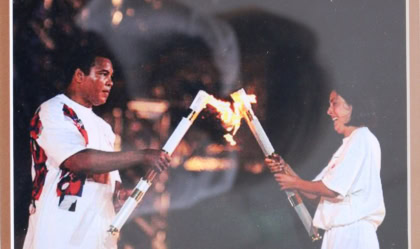
The Iconic Flame
This picture features Muhammad Ali getting the flame from Janet Evans during the opening ceremony.
Humble Heart
After the ceremony, President Bill Clinton placed his hand on Ali’s shoulder. Lonnie remembered that Clinton had tears in his eyes.
Back at the hotel, Ali sat with the torch in his hands. He believed people had cried because they felt sorry for him.
Lonnie told him that was not what the tears meant. People were crying because they were happy to see him. They were moved by his courage, by what he had stood for, and by what he made them remember.
The experience surprised Muhammad, as he never quite understood how much his work meant to others around him. Lonnie even said that Muhammad was always surprised when good things happened to him. That he knew people loved him, but never quite knew how much.
Still, with that in mind, Muhammad would go on to say this was one of the top moments of his career.
Medal for the moment
How Muhammad Ali got his replacement gold medal.
"“If my mind can conceive it, and my heart can believe it — then I can achieve it.”"
The Impact
Lonnie Ali discusses the moment Muhammad receives his gold medal at the Team USA game.
The Impact
Lonnie Ali discusses the moment Muhammad receives his gold medal at the Team USA game.
MEDAL FOR THE MOMENT
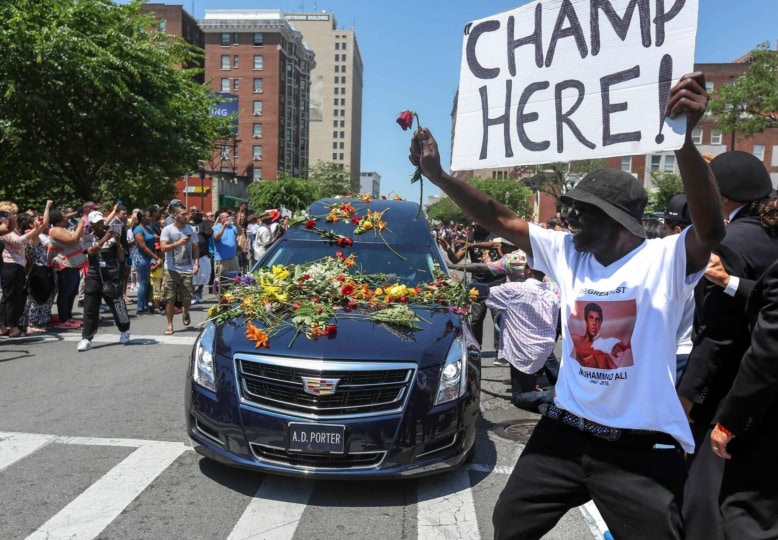
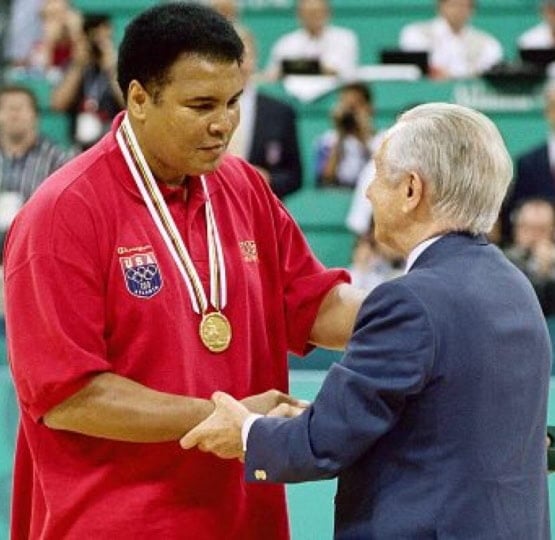
During the Atlanta Games, Ali also received a replacement for the Olympic gold medal he had won in 1960.
According to the often-told story, Ali threw his original medal into the Ohio River after being refused service at a burger joint in downtown Louisville because of his race. When he returned home from Rome, Ali was welcomed as a hero.
The city celebrated his victory with a parade, and he proudly wore the medal he had won for his country. But that celebration existed alongside the reality of segregation. Despite his achievement, his victory, and the pride he had brought to his hometown, Ali was still denied service because of the color of his skin.
The replacement medal was given to Ali by Juan Antonio Samaranch, head of the International Olympic Committee. The moment added another layer of meaning to his return to the Olympic stage.
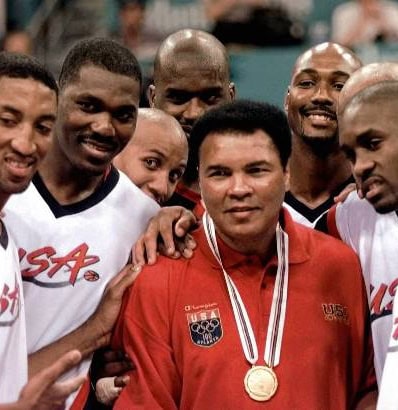
Within the stadium, cheers could be heard as Ali received his medal. Some of basketball’s biggest stars at the time, like Charles Barkley, Shaquille O’Neal, Scottie Pippen, and Penny Hardaway all ran out to congratulate Ali, highlighting Ali’s status as a sports legend.
Full Videos
Watch the full videos of the torch lighting and medal presentations.
Torch Lighting Full Video
Watch the full video of Muhammad Ali lighting the Olympic Cauldron.
Medal Ceremony Full Video
Watch the full medal ceremony presentation.
Greatness for Generations
The power of this moment was not limited to the stadium. Long after the flame was lit and the basketball game ended, the image of Ali standing before the world remained one of the most unforgettable moments of the 1996 Olympics.
Ali stepped forward with a tremor in his hand onto the same world stage where his journey had begun. He reminded viewers that greatness is not only measured by physical ability or athletic achievement, it can also be measured by courage, compassion, service, dignity, and the ability to inspire others. By lighting the cauldron, Ali became a symbol of perseverance and hope.
In 1960, Ali had been celebrated for what his body could do, for his athletic abilities, and noticed for his larger-than-life personality. In 1996, he was celebrated for who he had become.
People witnessed a man who had endured public criticism, exile from his sport, and a debilitating illness, stand before the world with quiet dignity.
In Atlanta, Ali’s greatest statement was not something he said. It was something he showed. After a lifetime of victories, struggles, and sacrifices, he stood before the world and reminded millions that strength is not only found in what we overcome, but in the courage to keep showing up.
Additional Sources
Muhammad Ali’s Iconic Olympic Torch Lighting Moment Almost Never Happened
-Torch Lighting photo.
Muhammad Ali carries Olympic torch through Louisville, 1984 | Kentucky Photo Archive
-Ali carrying the Olympic Torch through his hometown, Louisville, Kentucky.
Why Muhammad Ali received a second Olympic gold medal in 1996 – NBC Sports
-Photo of Muhammad with Juan at the Team USA Basketball Game.
Why Muhammad Ali received a second Olympic gold medal in 1996 – NBC Sports
-Muhammad Ali with the 1996 Team USA Men’s Basketball Team.
Special Thanks
This Digital Feature Exhibit is brought to you with the support of the 2026 Muhammad Ali Center summer interns, Der’Sean May and Ali Ferguson, alongside the Muhammad Ali Center Curations and Communications team.
The Complete Ali
Learn more about Ali's life both inside the ring and out in the world.